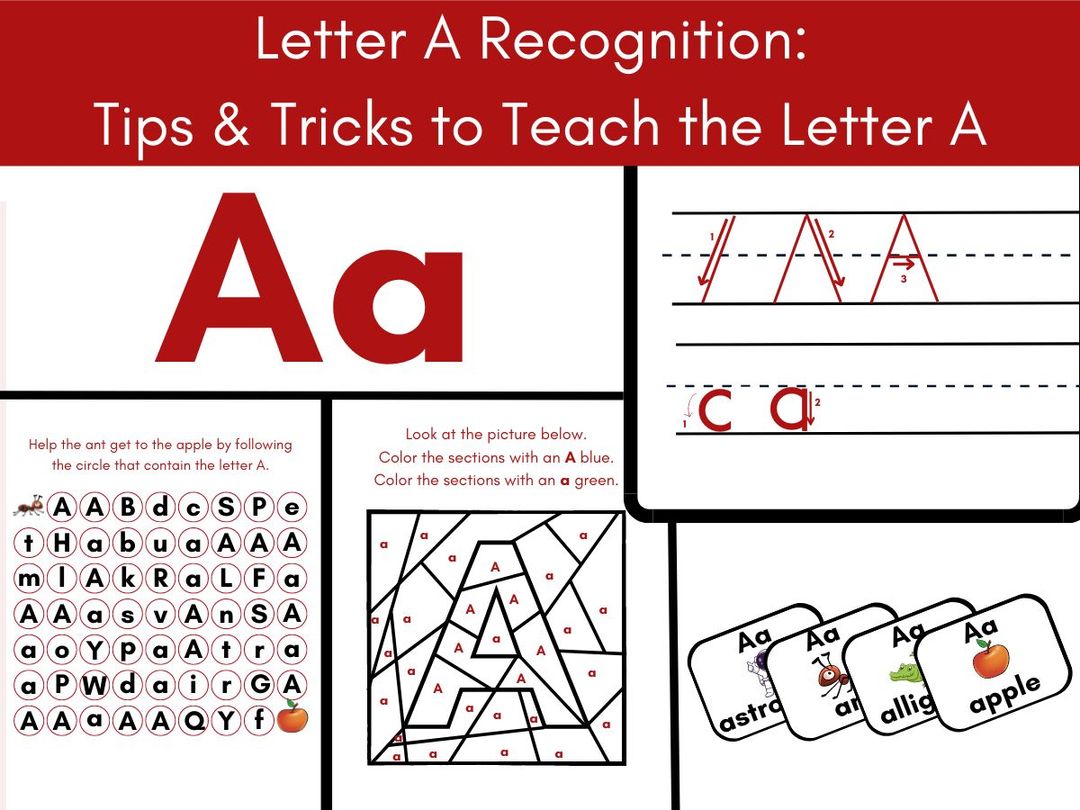
When it comes to reading, one of the first letters children learn is the letter A. Truly, the A is the building block of the English language. Not only does it feature in most early reading, but it can also stand apart as a word unto itself. But before a child can begin to read, they must first be able to recognize and identify the letters in front of them. And one of the best letters to begin with is the letter A.
How to teach the letter A
There are many different strategies and approaches for helping children learn to recognize the letter A. Some may be more effective than others, so try out many different options to see what resonates with your reader.
What is Letter Recognition and Why Is it Important.
A comprehensive look at how children learn letters, why letter recognition is important, and the best order of teaching letters to facilitate reading
If your child or students are getting ready to begin reading, a great starting point are short vowel decodable books. Click the peek inside button above to get a look inside Pat Had a Hat, a Short A Decodable Book, written by best-selling author Brooke Vitale, the founder of Charge Mommy Books. It is available in stage 1 of our CHARGE INTO READING™ Short Vowel Decodable Reader set.
Use letter flashcards
Show your children flashcards with pictures of objects that start with the letter A. Encourage them to say the picture name out loud and listen for the sound made by the first letter. Then look at the other letters in the word. Does the A appear anywhere else in the word?
Pro Tip: When learning to read, children will learn the short A sound first. To avoid confusion, try to focus on words that use this short A sound, such as ant, apple, or alligator. Avoid long A words such as ape, acorn, and ace.
An image depicting what letter a flashcards may look like.
Use hands-on activities
One effective way to teach the letter A to young children is through play and hands-on activities.
- Give your children a ball of clay and ask them to form the letter “a” using the material. This hands-on approach will help them to feel the shape of the letter, which will make it easier for them to remember it.
- Get letter-shaped cookie cutters and use them with either clay or actual cookie dough. Encourage kids to press the cookie cutter down and remove the hole from the middle of the letter. For extra fun, make some frosting and encourage your children to use paintbrushes to paint the letter using the correct strokes.
- Buy letter-shaped pasta or cereal and ask your children to sort out the As. This can also be a fun sensory experience!
- Do a scavenger hunt around the house. Talk about what sound the letter A makes. Then ask your child to find things that start with that sound. Write down the names of the items they find so they can see the letter used in the word.
Sing songs
Children love music, and they are more likely to remember information when it is presented in a musical format. You can use classic nursery rhymes such as “Mary Had a Little Lamb” to help children understand the sound of the letter. You can also create your own songs and rhymes that focus on the letter “a.” This will help children to associate the letter with its unique sound, which will make it easier for them to remember it.
Hang labels around the house
Kids can pick up a lot without even realizing they are doing it. Try labeling the different items and areas in your house. Make the first letter in the label bigger so that kids start to associate that letter with the item they see.
Point out the letter in books
Books and stories can be an incredibly effective way to teach the letter A to children. Instead of just reading, take a moment to point out the letters on the page. Not only will this help with letter recognition, but it will also help children understand that words are formed by stringing together several different letters.
How to write the letter A
Learning how to form the letter A correctly and legibly is essential to recognizing the letter when it appears in print. There are many ways to practice this skill, but one of the best is to physically write the letter.
When teaching children how to write the letter a, begin with lined paper that has the letter faintly written on it. Encourage your child to trace over the letter. This will help them to get a feel for how the letter is formed and how it should look when it is written. Once they are comfortable with tracing the letter A, graduate to lined paper with nothing written on it and encourage your child to form the letter on their own.
One of the first things to consider when teaching children to recognize the letter A is the difference between the capital letter A and the lowercase letter a. Although the letter itself is the same, the formation is quite different, and it is important for children to understand that the letter can appear in either form. Don’t worry yet about explaining to your child when each of the forms is used. Instead, keep their attention on identifying the letter in whatever variation it may appear.
Pro Tip: When teaching the letter A, it can be tempting to always right in capital letters. But remember, most writing is not done in uppercase letters, but in lowercase, so it is equally important for your child to recognize the letter a in its lowercase form.
Uppercase A
The uppercase A is formed by drawing three straight lines.
- Step 1: draw a line diagonally down to the left.
- Step 2: from the same starting point, drag a line diagonally down to the right
- Step 3: draw a horizontal line across the center connecting the two lines.
Lowercase A
- The lowercase A is formed by drawing two lines.
- Step 1: draw a round, open shape, like a c.
- Step 2: draw a straight line down from the top right of the open shape to the bottom right of the shape. Extend the line a bit above and below the round shape to give it a head and a tail.
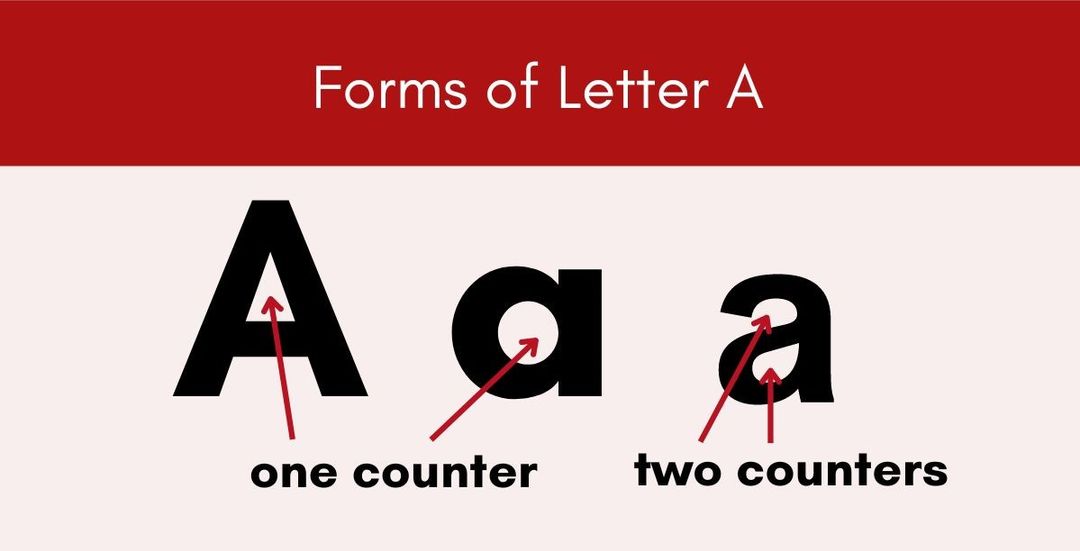
Pro Tip: Children learn to write a simple lowercase a first, but this is not always how the letter a appears in writing. The letter a can also appear as what is called a two-story or double-story letter. This means that the letter has two “holes” in it (also known as counters). Teach your child both forms of the letter a so that they can recognize either in print.
An image of the different forms a letter A can make, including the one-story and two-story examples for lowercase A.
How to read the letter A
Once you’re child has mastered letter recognition, it is time to focus on the sound the letter A makes. Recognizing the sound out loud is called phonemic awareness and it comes before actually learning how to read the letter. Remember that an A can make two sounds: The short a as in apple, and the long a as in acorn. Focus first on the short A before moving on.
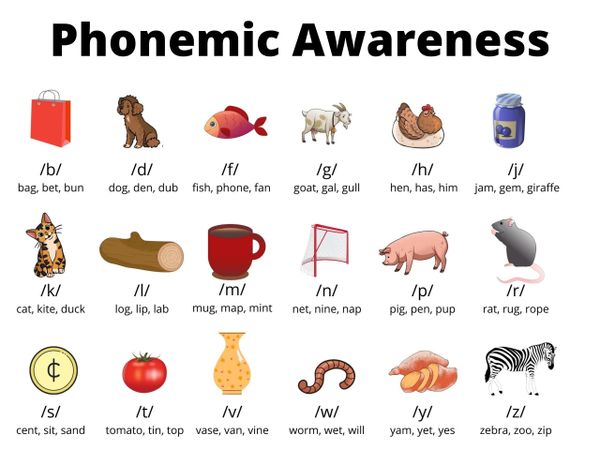
Phonemic Awareness: A Guide to Phonemes with Visual Examples
A guide to phonological awareness, phonemic awareness, and how to teach phoneme blending, addition, deletion, substitution, and segmentation with examples.
These are pictures of different short vowel phonemes. Focus on these first when teaching vowel sounds.
Focusing on a single vowel at a time is a great way to cement a child's recognition of what sound a letter makes. For more practice with the Short A Vowel Sound, check out Pat Had a Hat: Short A Decodable Reader, part of the Charge into Reading Short Vowel Decodable Reader Set, available to buy today. This 5-book set is stage 1 in our structured system of decodable readers reviewed and approved by literacy specialist Marisa Ware and written by best-selling author Brooke Vitale.
Remember, while it’s fine to show both uppercase and lowercase letters on flashcards, they won’t actually appear side by side in print. Make sure you share the letters with your child separately as well so that they can learn to recognize the letter A when it appears in only one form.